
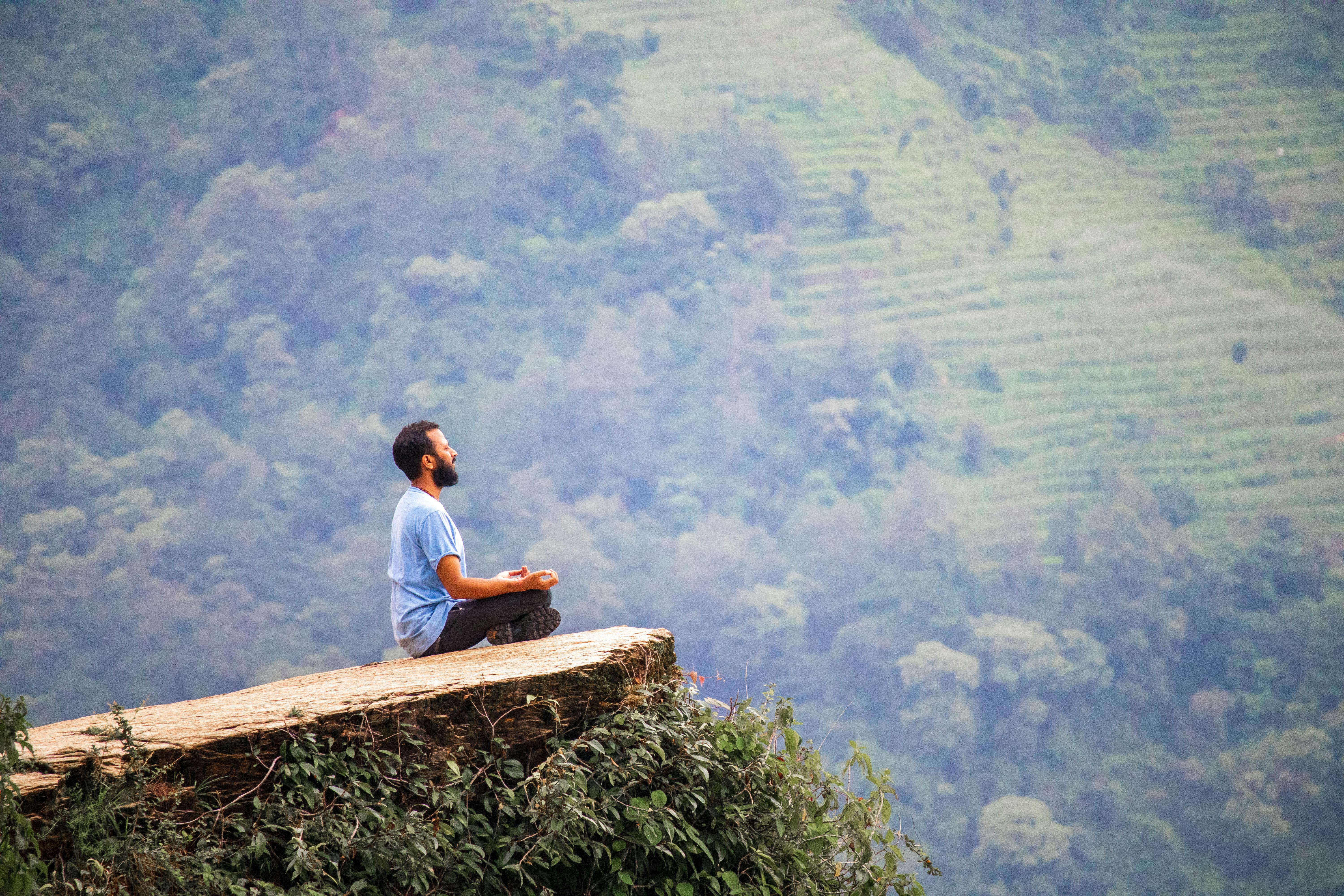
Slow breathing is the common element across yoga, meditation and clinical relaxation training. The effect on heart rate runs through a specific reflex arc rather than through suggestion.
The heart is under continuous dual control
Heart rate is set by two opposing branches of the autonomic nervous system. One accelerates the heart, the other, carried largely by the vagus nerve, slows it.
At rest the slowing influence dominates, holding the rate well below the intrinsic pace the heart's own pacemaker would run at if disconnected from both.
Calming therefore does not require adding a brake. It requires increasing an influence that is already present and easing the accelerating one.
Breathing modulates the vagus rhythmically
Heart rate rises slightly during inhalation and falls during exhalation, an oscillation produced by rhythmic changes in vagal output tied to the breathing cycle.
Inhalation briefly reduces vagal restraint on the heart; exhalation restores it. Lengthening the exhale therefore extends the portion of each cycle when slowing dominates.
This is why instructions to breathe out longer than in appear across otherwise unrelated traditions. They exploit an existing coupling rather than creating one.
Pressure sensors close the loop
Sensors in the walls of major arteries detect stretch and report blood pressure continuously to the brainstem, which adjusts heart rate to compensate.
Breathing changes pressure in the chest, which changes how much blood returns to the heart, producing a pressure wave that these sensors detect.
At around six breaths per minute the breathing rhythm aligns with the natural frequency of this control loop, and the resulting oscillation in heart rate becomes unusually large.
Resonance is what training targets
That alignment is why slow-breathing protocols converge on a similar pace regardless of tradition, and why biofeedback training aims to find each person's resonant frequency.
The enlarged oscillation is thought to exercise the reflex, and repeated practice is associated with greater vagal influence at rest rather than only during the session.
Effects during a session are immediate and easily measured; effects that persist between sessions build slowly and are harder to demonstrate.
Attention and posture contribute
Slow breathing requires attention to the breath, which occupies the same capacity that rumination otherwise uses, so the technique competes directly with worry.
Upright seated posture allows fuller diaphragm movement, which is why traditional practices specify position rather than leaving it open.
Anyone with a respiratory condition or a heart rhythm disorder should raise structured breathing practice with a clinician before adopting it, since deliberate pattern changes are not neutral.