
Balance is often treated as a fixed attribute that some people have. It is a trainable skill built on three sensory systems, each of which degrades with age in a way that practice partly offsets.
Three inputs, continuously reconciled
Standing upright requires the brain to combine vision, signals from the inner ear about head position and acceleration, and position sense from receptors in joints, muscles and the soles of the feet.
These three streams are compared continuously, and where they disagree the brain weights them according to which is currently most reliable.
Balance therefore looks effortless while being the product of constant sensory arbitration and rapid muscular correction below conscious awareness.
Each input degrades on its own schedule
Visual acuity, contrast sensitivity and depth perception all decline with age, which reduces the quality of the stream most people rely on most heavily.
Hair cells in the vestibular organs are lost gradually and are not replaced, so the inner ear contribution weakens progressively across adulthood.
Position sense from the feet and ankles diminishes too, and it declines faster where diabetes or nerve damage is present.
Reliance shifts as inputs weaken
As position sense and vestibular input fade, weight shifts toward vision, which explains why balance in low light deteriorates markedly with age.
It also explains why closing the eyes while standing on one leg becomes disproportionately difficult, since it removes the input that had been compensating for the others.
That growing dependence on a single stream is what makes balance fragile in unfamiliar or poorly lit environments.
Correction speed matters more than steadiness
Nobody stands perfectly still. The body sways continuously and is corrected continuously, so balance is a control loop rather than a static state.
What deteriorates is the speed and force of the correction, particularly the ability to step quickly enough to catch a shift that has gone too far.
This is why leg strength and reaction speed matter alongside sensory function, since detecting a problem is useless without the capacity to respond.
Practice targets the trainable parts
Balance training works by deliberately challenging the loop, reducing the base of support, removing vision or introducing unstable surfaces so correction is required repeatedly.
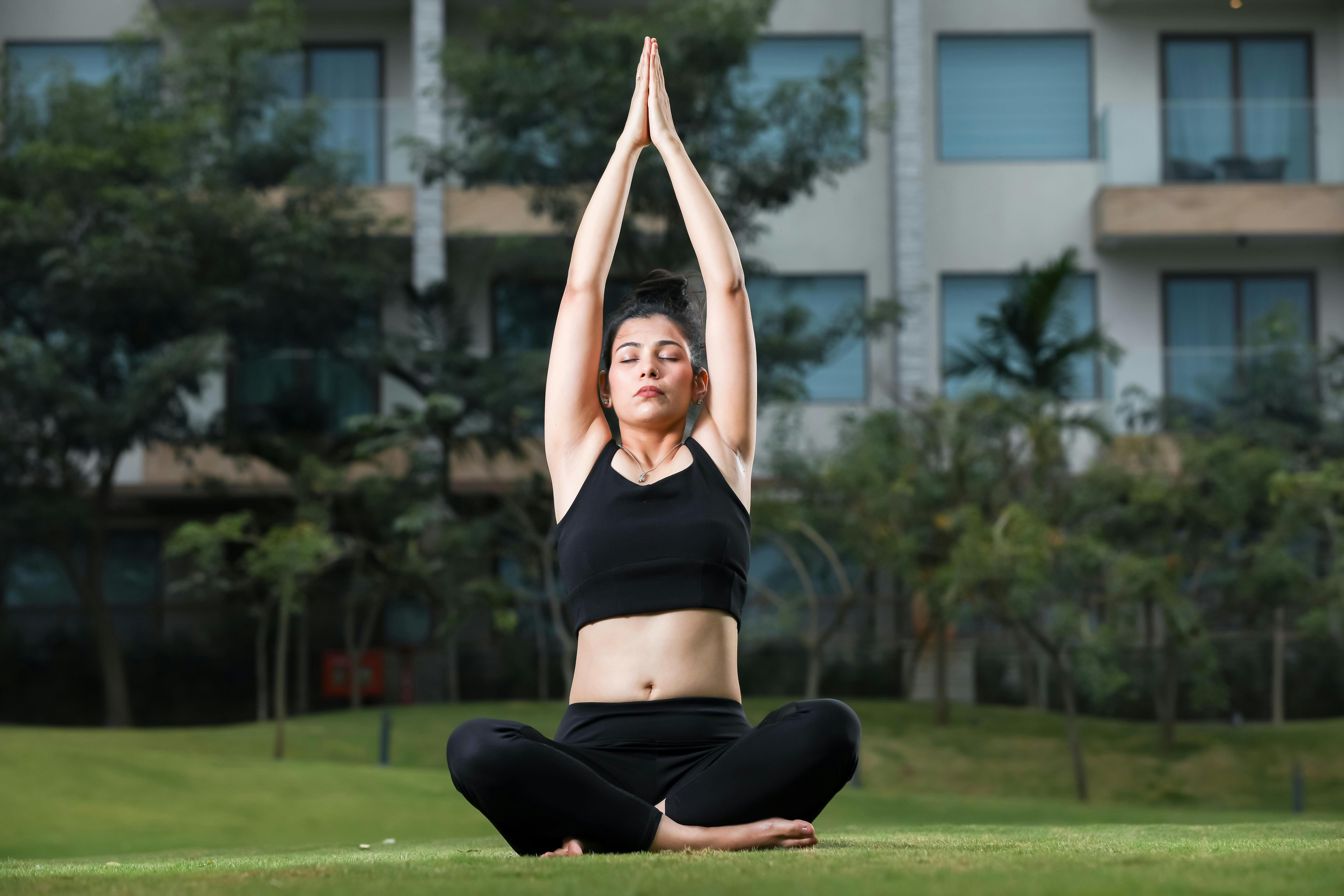
Yoga is well suited to this because sustained single-leg postures demand continuous correction, combined with the strength work that makes correction possible.
Anyone who has already fallen, or who feels unsteady, should be assessed by a clinician first, since medication, blood pressure and inner ear disorders are common contributors that training will not address.