
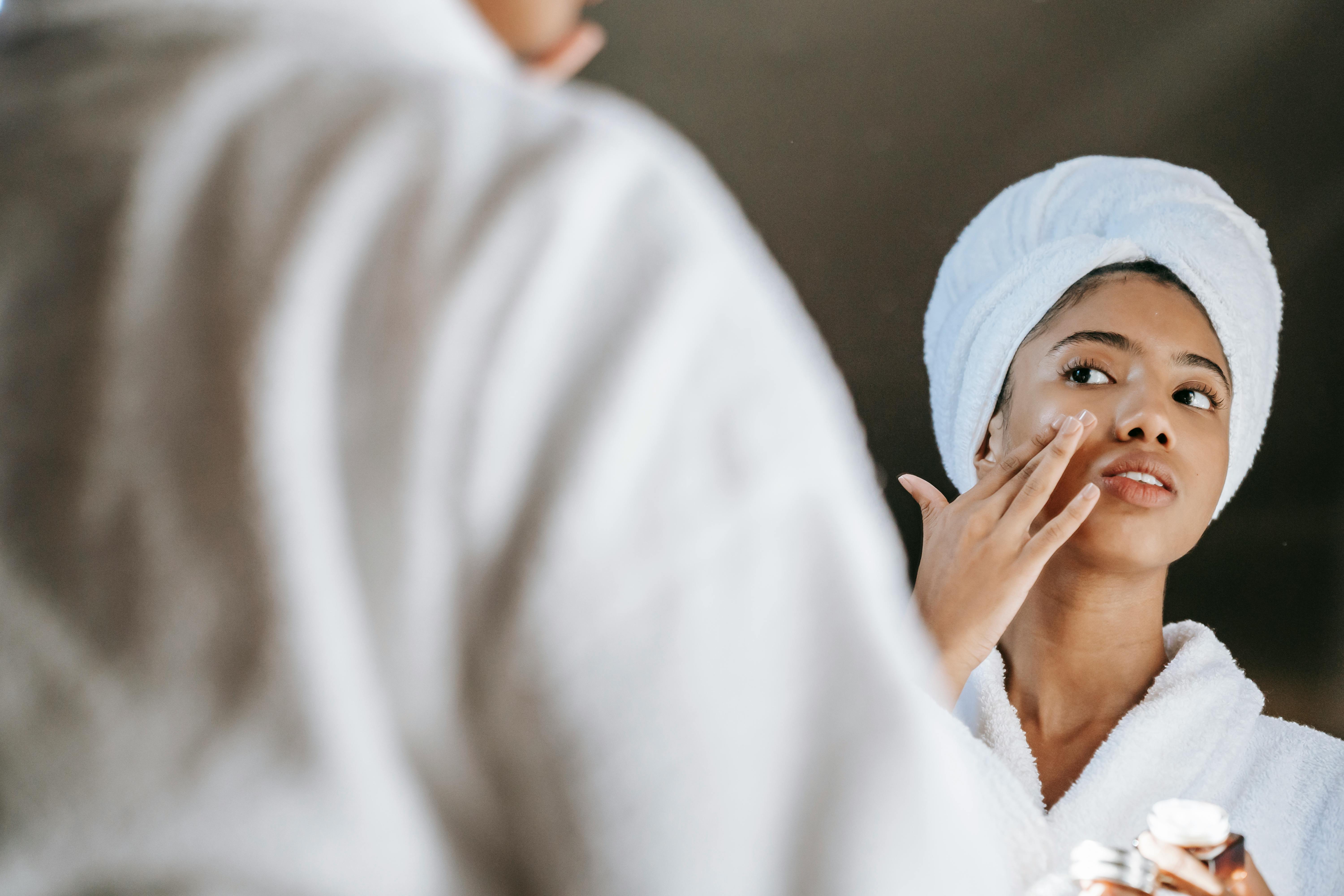
The skin barrier is invoked constantly in product marketing without much description of what it is. It is a specific physical structure occupying the outermost fraction of a millimetre of skin.
A structure of cells and lipids
The outer layer consists of flattened cells that have lost their nuclei, filled with a tough protein and stacked in overlapping sheets.
Between them sits a mixture of lipids arranged in ordered layers, which is what actually blocks the passage of water in either direction.
The arrangement is often compared to brickwork, with the cells as bricks and the lipid matrix as mortar, and the mortar is the part that does the sealing.
Water retention is the primary job
A land animal loses water continuously through the skin, and without an effective barrier that loss would be unsustainable.
The rate of loss can be measured at the surface, and it is the standard laboratory index of barrier function, rising whenever the structure is disrupted.
Cells within the layer also hold water-attracting compounds derived from broken-down protein, which retain moisture within the layer itself.
Exclusion runs in the other direction
The same structure limits entry of irritants, allergens and microorganisms, so barrier integrity determines what reaches the living tissue below.
Where the barrier is compromised, substances that would ordinarily be excluded reach immune cells in the deeper layers and provoke a response.
This is the mechanism connecting barrier disruption to sensitivity, since the reaction is to material that should never have arrived.
Common disruptions are mundane
Surfactants in cleansers dissolve lipids, which is how they remove oil and dirt, and aggressive or frequent cleansing removes barrier lipids along with them.
Hot water, low humidity, wind and repeated wetting and drying all degrade the structure, which is why hand skin suffers most in winter and in certain occupations.
Physical exfoliation removes cells faster than they can be replaced, thinning the layer rather than refining it as intended.
Repair is a matter of supplying materials
The layer rebuilds itself continuously, so barrier recovery mostly requires removing the cause of the damage and allowing time.
Products that occlude the surface reduce water loss while repair proceeds, and those supplying the same lipid classes present in the barrier can support reconstruction.
Skin that is persistently cracked, painful, weeping or infected has passed beyond product selection and needs medical assessment.