
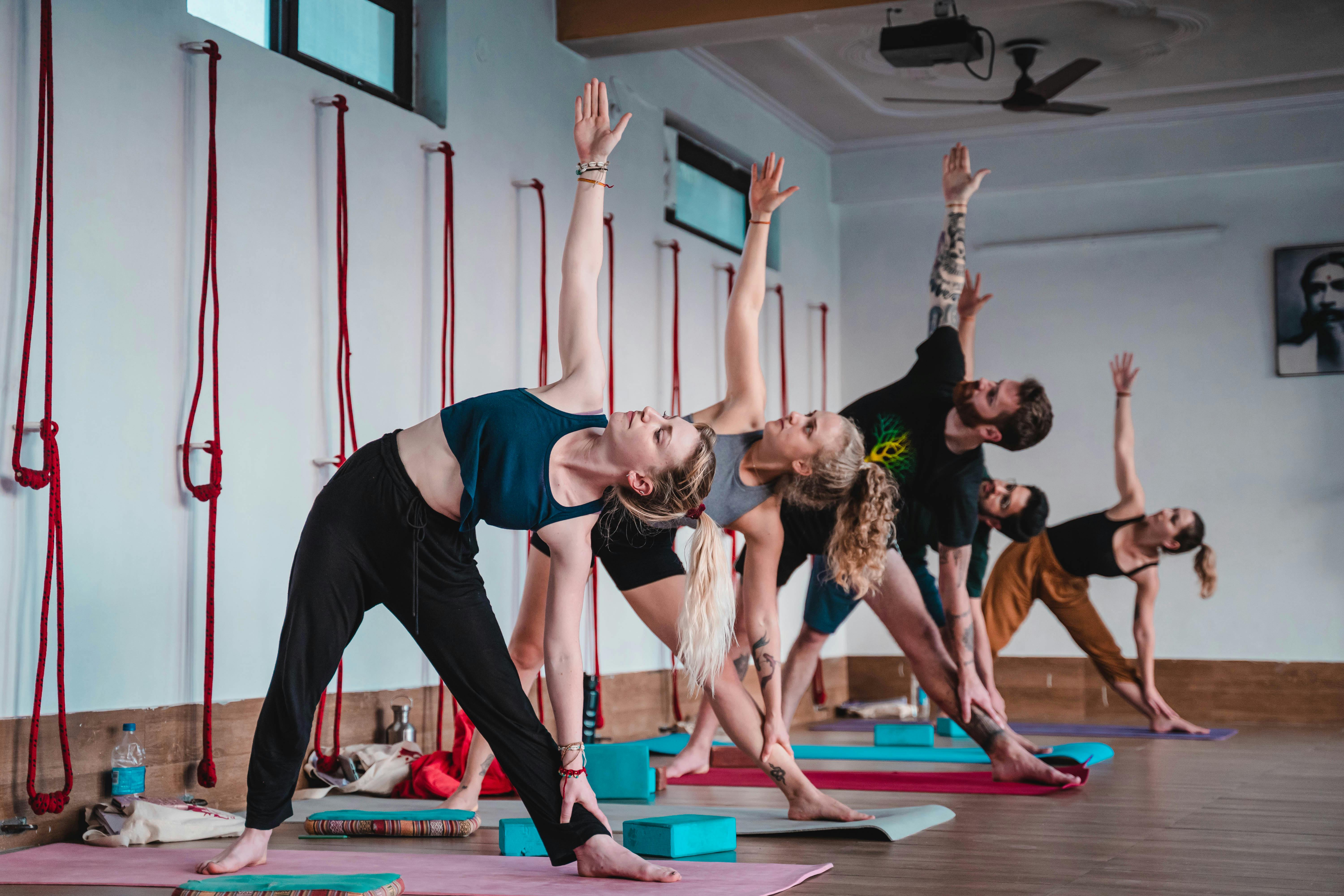
Discover how cutting-edge neurofeedback technology, combined with ancient yoga and meditation practices, is revolutionizing brain optimization for peak performance, stress reduction, and unparalleled longevity in 2026. Explore the best professional services and home devices to invest in your cognitive wealth.
Introduction to the Topic
In the relentless pursuit of not just living longer, but living better, healthier, and with sustained mental acuity, the year 2026 marks a pivotal moment. We're moving beyond basic wellness to sophisticated bio-optimization, and at the forefront of this revolution is the powerful synergy of neurofeedback, yoga, and meditation. For decades, practitioners have sought deeper states of consciousness, sharper focus, and profound inner peace through yoga and meditation. Now, imagine accelerating that journey, making it more precise, and even more effective, by directly training your brainwaves. This isn't science fiction; it's the reality of neurofeedback, and it’s rapidly becoming the secret weapon for those committed to maximizing their cognitive potential and securing a truly wealthy future – rich in health, clarity, and resilience.
As editors at longevitywealthplan.com, we understand that true wealth extends far beyond financial assets; it encompasses vibrant health, mental agility, and emotional well-being. Neurofeedback, when integrated with time-honored practices like yoga and meditation, offers an unprecedented pathway to these goals. It’s about more than just managing stress; it’s about engineering a brain that is inherently more resilient, focused, and capable of sustained high performance, directly contributing to both your longevity and your capacity for generating wealth.
Backgrounds & Facts
So, what exactly is neurofeedback? At its core, neurofeedback is a non-invasive form of biofeedback that trains the brain to regulate its own activity. Using electroencephalography (EEG) sensors placed on the scalp, the system measures your brainwave patterns in real-time. These brainwaves—Delta, Theta, Alpha, Beta, and Gamma—each correspond to different states of mind, from deep sleep (Delta) to intense focus (Gamma).
The magic happens when this real-time brainwave data is fed back to you, often through visual or auditory cues. For instance, if you're trying to increase your Alpha waves (associated with relaxed alertness, perfect for meditation), the software might reward you with a pleasing sound or an expanding image when your brain produces more Alpha. Conversely, if you're producing too many fast Beta waves (associated with anxiety), the feedback might become less pleasant until your brain naturally learns to reduce them.
This process, based on operant conditioning, teaches your brain to self-regulate, optimizing its patterns for desired states. Historically, neurofeedback has been used clinically to treat conditions like ADHD, anxiety, depression, PTSD, and even improve athletic performance. However, its application has exploded into the wellness and peak performance sectors, especially as technology has become more accessible and sophisticated.
Why is this particularly relevant for yoga and meditation? Both practices aim to cultivate specific brain states: the calm focus of Alpha, the deep meditative states of Theta, and sustained Gamma bursts during moments of insight. Neurofeedback acts as a powerful accelerator, providing immediate, objective feedback that helps practitioners consciously and subconsciously guide their brains into these beneficial patterns, often achieving in weeks what might otherwise take years of dedicated practice. It's not replacing yoga or meditation; it's enhancing them, making the journey more efficient and profound.
Expert Opinion / Analysis
“Neurofeedback is not just about fixing what’s broken; it’s about optimizing what’s already great and unlocking latent potential,” explains Dr. Evelyn Reed, a leading neuroscientist specializing in cognitive enhancement. “When combined with mindfulness practices, you create a powerful feedback loop: the meditation cultivates awareness of your internal states, and neurofeedback provides the precise data and training to fine-tune those states at a neurological level. It’s like having a master conductor for your brain’s orchestra.”
From the perspective of a seasoned mindfulness teacher, Anya Sharma, founder of 'Mindful Longevity Institute,' offers, “For years, I’ve guided students to ‘find their center’ or ‘deepen their meditation.’ Neurofeedback gives us an objective mirror to see what ‘finding your center’ actually looks like in your brainwaves. It demystifies the process, making profound states more accessible. In yoga, the ability to maintain a calm, focused mind even in challenging poses is significantly enhanced, leading to a more integrated mind-body experience and faster progress.”
The synergy is clear: neurofeedback provides the direct, measurable brain training, while yoga and meditation offer the philosophical framework, body awareness, and conscious integration of these newfound brain states into daily life. This dual approach fosters not just temporary improvements, but sustained changes in neural pathways, leading to enhanced emotional regulation, improved cognitive function, deeper sleep, and a profound sense of inner peace – all critical components for a life of longevity and sustained personal wealth creation. It's about building a brain that is resilient to stress, highly adaptable, and primed for continuous learning and innovation.
💰 Best Options in Comparison (VERY IMPORTANT)
Investing in neurofeedback is an investment in your most valuable asset: your brain. As of 2026, the market offers a spectrum of options, from professional clinical services to advanced home systems, catering to various needs and budgets. Understanding the differences is crucial for making the right choice for your longevity and wealth plan.
Here are the leading options we recommend considering:
- Option 1: Professional Neurofeedback Clinics & Luxury Wellness Retreats
For those seeking the most comprehensive, personalized, and often fastest results, professional clinics offer a gold standard. These services typically begin with a Quantitative Electroencephalogram (QEEG), or “brain map,” which provides a detailed analysis of your brainwave patterns. Based on this, highly trained neurofeedback specialists design bespoke training protocols. Many luxury wellness retreats now integrate neurofeedback as a core component of their longevity and peak performance programs, offering a holistic experience that includes expert coaching, advanced yoga, meditation, and nutritional guidance. - Option 2: High-End Home Neurofeedback Systems with Subscription Services
The technology for home use has advanced dramatically. These systems typically involve a high-fidelity EEG headset or sensors coupled with sophisticated software, often leveraging AI to personalize training protocols over time. Many come with guided meditation libraries, yoga integration modules, and data analytics dashboards to track progress. While requiring more self-discipline than a clinic, they offer significant long-term cost savings and unparalleled convenience. Many reputable providers offer remote coaching and support as part of their subscription packages. - Option 3: Consumer-Grade EEG Headsets & Mindfulness Apps (Entry-Level)
For those new to biofeedback or with a more modest budget, devices like advanced Muse headsets or Flowtime offer an excellent entry point. While not full clinical neurofeedback, they provide real-time feedback on your brain states (e.g., focus, calm) during meditation or relaxation exercises. These are fantastic for building foundational mindfulness skills and getting a taste of brainwave training, often integrating seamlessly with guided yoga and meditation apps.
To help you compare, here’s a detailed breakdown:
| Feature / Option | Professional Clinic/Retreats | High-End Home Systems | Consumer-Grade EEG & Apps |
|---|---|---|---|
| Target User | Serious optimization, specific issues (e.g., severe anxiety, peak performance), high-net-worth individuals, those seeking holistic experiences. | Tech-savvy individuals, ongoing self-improvement, budget-conscious for long-term use, those comfortable with self-administration. | Beginners to biofeedback, casual mindfulness users, those focused on relaxation/focus metrics, exploring the concept. |
| Approach | QEEG brain mapping, personalized protocols, expert clinical supervision, often integrated with coaching, therapy, and other wellness modalities. | AI-guided or pre-set protocols, self-administered, often with remote expert support via subscription. Focus on specific brainwave training. | Real-time feedback on general brain states (calm, focus) during guided meditations or relaxation exercises. Simpler metrics. |
| Equipment Quality | Clinical-grade multi-channel EEG, advanced analysis software, highly sensitive sensors. | High-fidelity EEG headset/sensors (e.g., 2-4 channels), dedicated software with robust algorithms. | Consumer-grade EEG headbands (e.g., 1-2 channels), simplified app interface. |
| Cost (2026 Est.) | $2,000 - $10,000+ for a package of sessions or a retreat (initial QEEG often $300-$800, sessions $150-$300 each). | $500 - $2,500 for hardware, plus $50-$150/month for software subscription and/or remote coaching. | $100 - $400 for hardware, plus $10-$30/month for premium app features. |
| Effectiveness | Potentially faster, more targeted, and profound results due to personalized protocols and expert supervision. Ideal for complex issues. | Excellent for consistent self-training and maintenance; requires discipline. Strong for general cognitive enhancement and specific goals. | Good for stress reduction, improving meditation depth, and focus. Less precise for deep brainwave shaping or complex issues. |
| Key Benefits | Deep-seated neurological change, resolution of complex cognitive/emotional issues, accelerated peak performance, holistic support. | Convenience, long-term habit formation, data-driven progress tracking, significant cost savings over time compared to clinics. | Affordable entry, improved relaxation, enhanced meditation experience, accessible introduction to biofeedback. |
| Integration with Yoga/Meditation | Expert guidance on integrating trained brain states into physical and meditative practices. Often part of comprehensive programs. | Software often includes guided meditations and prompts for applying learned brain states during self-directed yoga/meditation. | Primarily used during meditation to provide real-time feedback on mental states like calm or focus. |
| Recommended Providers (Examples) | Explore Longevity Neuro-Clinics, Luxury Brain Wellness Retreats. | Look for systems like BrainCo FocusPro, Myndlift Pro, or Neuroptimal Home System. | Check out the latest Muse Headsets or Flowtime Meditation Trackers. |
Outlook & Trends
The future of neurofeedback, especially in conjunction with yoga and meditation, is incredibly bright and fast-moving. By 2026, we're seeing several key trends that will make this technology even more powerful and accessible:
- Hyper-Personalization via AI: Artificial intelligence will continue to refine neurofeedback protocols, adapting in real-time to individual brain responses and learning patterns. This means even more effective and efficient training tailored to your unique neural landscape.
- Seamless Wearable Integration: Expect to see EEG sensors discreetly integrated into everyday wearables – smartwatches, smart glasses, and even stylish headbands – making neurofeedback training as effortless as listening to music.
- Immersive VR/AR Experiences: Virtual and augmented reality will transform neurofeedback into engaging, gamified experiences. Imagine navigating a serene virtual landscape, with your brainwave patterns directly influencing the environment, deepening your meditative state or sharpening your focus in an interactive, compelling way.
- Telehealth & Remote Coaching: The expansion of telehealth means more access to certified neurofeedback coaches and QEEG brain mapping from the comfort of your home, bridging geographical gaps and making expert guidance more affordable.
- Integration with Broader Longevity Stacks: Neurofeedback will increasingly be combined with other longevity technologies and practices – genetic insights, personalized nutrition, advanced sleep tracking, and even microdosing regimens (under professional guidance) – creating a holistic approach to brain health and anti-aging that is truly revolutionary.
These trends point towards a future where optimal brain health isn't a luxury, but a fundamental, accessible component of any serious longevity and wealth plan.
Conclusion
The convergence of neurofeedback with the ancient wisdom of yoga and meditation represents a paradigm shift in personal development and longevity. It offers a scientifically validated pathway to not only mitigate stress and sharpen focus but to fundamentally re-engineer your brain for sustained peak performance, emotional resilience, and profound inner peace. In an increasingly complex world, a well-optimized brain is your ultimate asset – fueling innovation, enhancing decision-making, and protecting your mental health for decades to come.
Whether you choose the bespoke guidance of a professional clinic, the convenience of an advanced home system, or an accessible consumer-grade device, investing in neurofeedback is an investment in your cognitive capital. It's about taking proactive control of your mental landscape, ensuring that your journey towards longevity is not just long, but also rich with clarity, purpose, and unparalleled well-being. Explore the options, invest in your brain, and chart a course for a longer, wealthier, and more mindful life.